
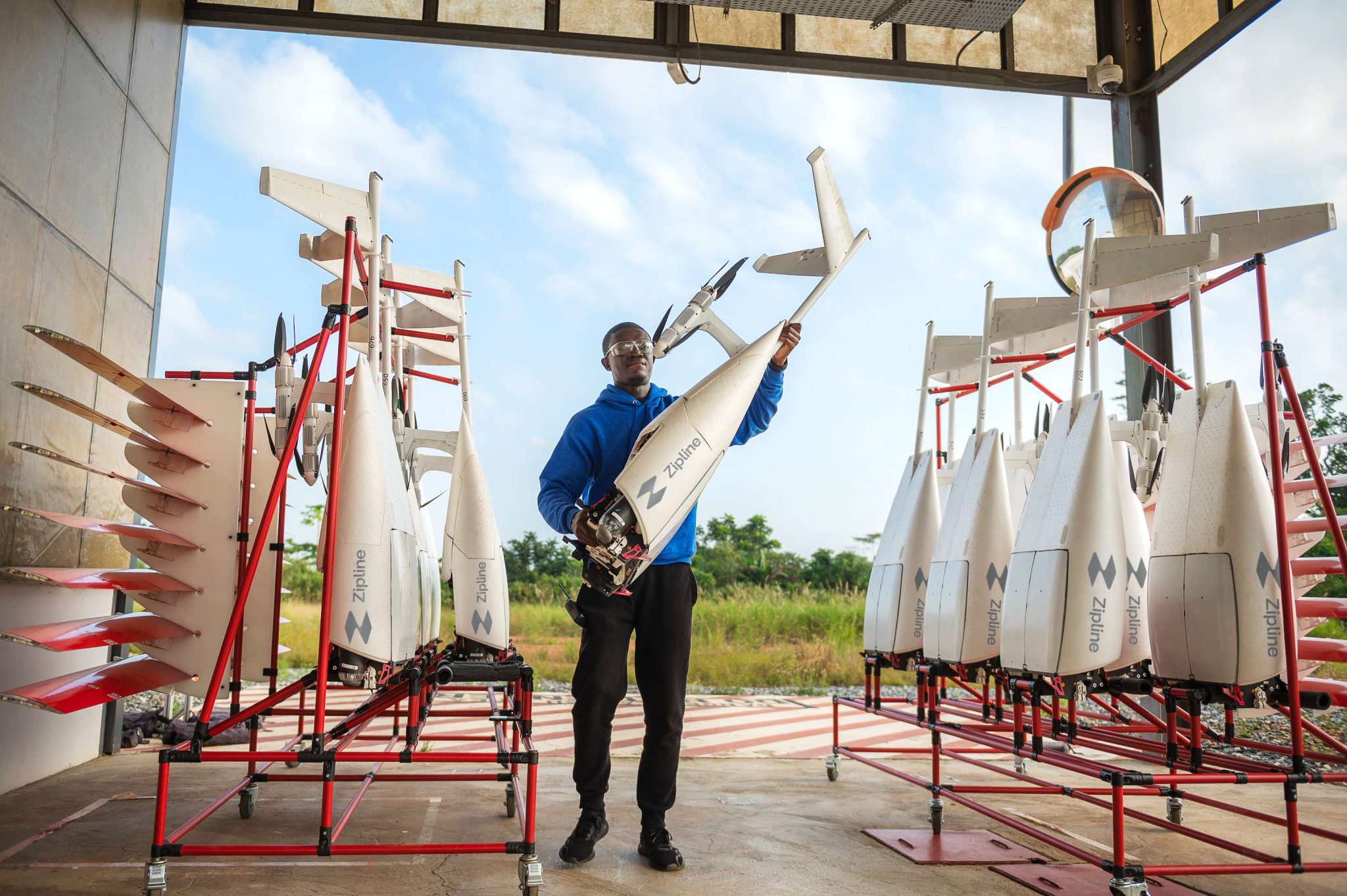
Zipline’s Expansion Shows How Africa’s Health Logistics Is Scaling Beyond Cities
Zipline’s announcement to expand its operations in Nigeria with 12 new hubs targeting over 100 million people signals a growing shift in how healthcare logistics is being designed across Africa. Instead of relying solely on road networks and centralized hospitals, more countries are integrating aerial delivery systems into national supply chains.
The model is already active in several African countries, where drones deliver blood, vaccines, and essential medical supplies to remote health facilities. In practice, this reduces waiting times for critical supplies in areas with unreliable or slow road access, especially during emergencies or seasonal disruptions.
Why Rural Access Still Defines Healthcare Outcomes
In many rural communities across Nigeria, access to healthcare is shaped less by medical availability and more by logistics. Clinics may exist, but essential supplies such as blood units, vaccines, or emergency medication can take hours or even days to arrive, depending on road conditions and distance from central warehouses.
Drone-based delivery systems aim to reduce this gap by bypassing road constraints entirely. A health facility that previously depended on irregular delivery schedules can now receive urgent supplies within minutes or hours, depending on operational coverage.
The Real Shift Is in Supply Chain Design
What makes Zipline’s expansion significant is not only the use of drones but the redesign of how medical supply chains are structured.
Instead of large centralized distribution systems serving wide geographic regions, the model is shifting toward distributed hubs placed closer to demand zones. Each hub functions as a local logistics node, enabling faster dispatch and more predictable delivery cycles for rural facilities.
This structure is especially important in countries where geography, road infrastructure, and population dispersion make traditional logistics costly or slow.
Why This Matters Beyond Technology

For rural health workers, the impact is practical rather than technological. It means fewer delays in emergencies, more reliable vaccine distribution schedules, and reduced pressure on overstretched transport systems.
In many cases, healthcare outcomes are not limited by medical expertise but by whether supplies arrive on time. Logistics becomes part of healthcare delivery itself, rather than a separate function behind it.
Forward-Looking Implications for Africa’s Health Systems
Zipline’s expansion reflects a broader shift in African health systems toward integrating technology-driven logistics into national infrastructure planning.
Governments are increasingly exploring hybrid models that combine traditional road transport with automated or aerial delivery systems.
Moving forward, the key question is not whether drone logistics will scale, but how effectively it can be integrated into broader healthcare systems to ensure consistency, affordability, and nationwide coverage beyond pilot regions.
As more hubs are deployed, the long-term impact will depend on how well these systems are maintained, financed, and aligned with national health supply chains.