Africa Built a Mobile Money Giant. So, Why Does Cash Still Control Daily Trade?
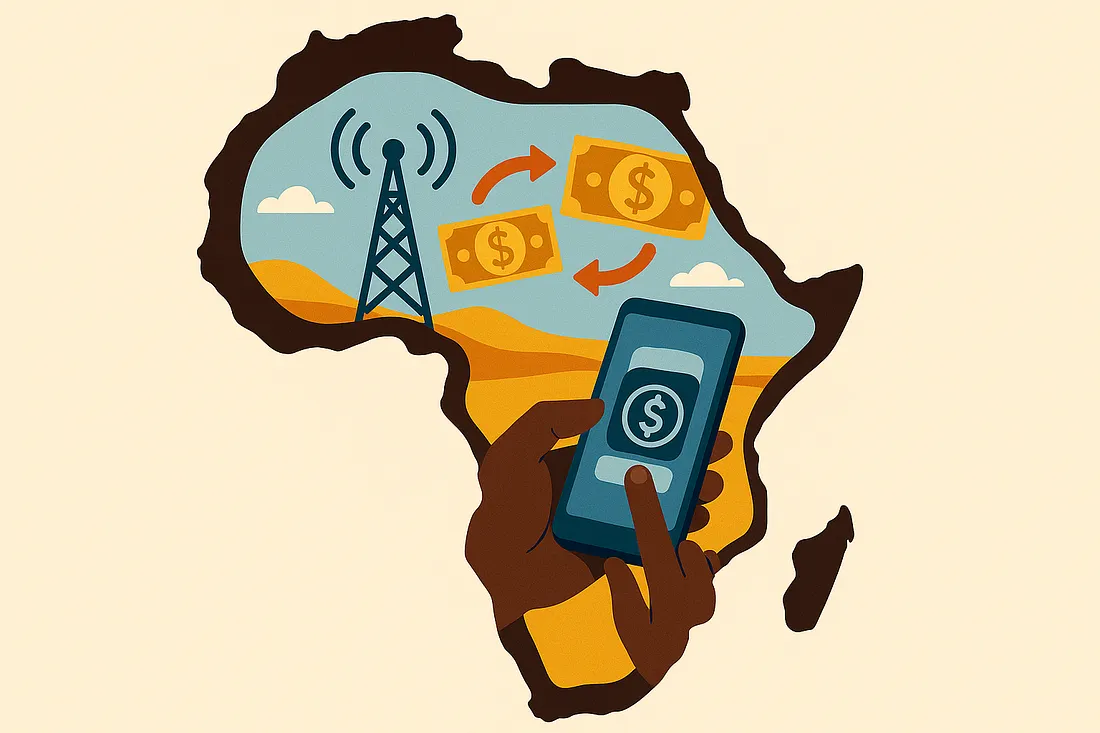
Africa’s mobile money ecosystem has become one of the continent’s largest digital finance transformations Sub-Saharan Africa processed around 1.4 trillion dollars in mobile money transactions in 2025, representing roughly two-thirds of global transaction value, according to GSMA industry data.
Platforms such as M-Pesa, MTN MoMo, Orange Money, and Airtel Money have transformed how millions of people move money, especially in markets where traditional banking infrastructure remains limited.
From an investment perspective, the story looks almost complete. Mobile money adoption is growing, transaction volumes continue rising, and telecom operators are expanding deeper into financial services.
But inside everyday trade, cash still solves problems that digital payments do not consistently handle well.
Where Mobile Money Wins and Where It Still Breaks
In many African cities, mobile money works extremely well for person-to-person transfers, airtime purchases, and bill payments. But daily trade in informal markets still exposes operational friction that policy reports rarely address.
A trader in Kampala may receive payments through mobile money in the morning, then switch back to cash during peak hours because network delays slow customer flow. In Lagos, some merchants still ask customers for cash after failed transfer confirmations, forcing customers and merchants to stand around waiting while traders verify whether money has actually arrived.
The problem is no longer access to digital payments. It is whether merchants trust them under pressure.
Cash settles instantly. It does not depend on network stability, failed confirmation messages, or delayed reversals during busy trading periods.
For businesses operating on thin margins and fast inventory turnover, even short delays can directly affect sales volume.
The Interoperability Problem Still Has Not Fully Disappeared
Africa’s mobile money systems expanded quickly, but many still operate in fragmented ecosystems tied to telecom networks, national regulations, and separate settlement systems.
Cross-network transfers have improved in countries like Ghana and Kenya, yet friction still exists across many regional corridors. Operators continue dealing with settlement delays, varying transaction fees, and inconsistent interoperability between platforms.
For small businesses operating across borders, these inefficiencies become expensive very quickly.
A merchant moving goods between neighboring countries may still lose money through conversion costs, delayed settlement times, or multiple wallet transfers before funds fully clear.
This is where the mobile money narrative becomes more complicated. The infrastructure exists, but the experience is not yet frictionless enough to fully replace how traders already move money day to day.
Why Informal Markets Still Trust Cash More Than Platforms

One of the biggest misconceptions around mobile money adoption is the assumption that high transaction volume automatically means full behavioral transition away from cash.
In practice, many businesses operate in hybrid systems where both cash and mobile money exist side by side.
Digital payments may handle supplier transfers or remote transactions, while physical cash still dominates high-speed retail environments where reliability matters more than convenience.
This is not resistance to technology. It is merchants adapting to the fastest and least risky way to keep business moving.
If one failed transfer can hold up multiple customer transactions during a busy market period, traders naturally fall back to the method with the lowest execution risk.
That is why cash continues to survive even inside economies considered global leaders in mobile money adoption.
Forward-Looking Implications for Africa’s Payment Infrastructure
Africa’s mobile money growth is real and economically significant. The continent now operates one of the largest digital payment ecosystems in the world.
But moving forward, the challenge is no longer introducing digital payments. It is reducing the operational friction that still makes cash more dependable in parts of everyday trade.
Until interoperability improves consistently across networks, settlement becomes more reliable under pressure, and merchants trust digital payments as much as physical cash, Africa’s payment economy will likely remain hybrid rather than fully cashless.
The deeper issue is that transaction volume does not automatically translate into trust during real commerce. Mobile money may dominate headlines and growth statistics, but traders still judge payment systems by what happens during busy market hours when sales cannot afford delays. Until digital payments become as predictable as cash under pressure, Africa’s economy will likely continue operating between two systems instead of fully transitioning to one.